

Way Up High in the Apple Tree

Lyrics
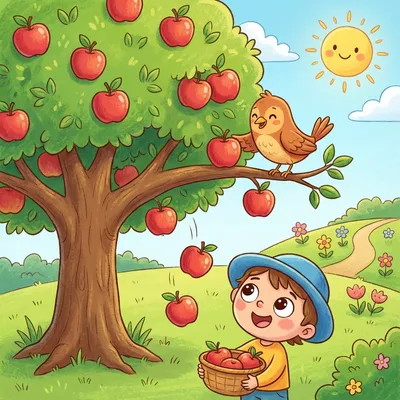
Way up high in the apple tree,Two little apples smiled at me.I shook that tree as hard as I could,Down came the apples,Mmmm, were they good!
History and Meaning
"Way Up High in the Apple Tree" is mimed as much as sung: children stretch up to the apples, shake the tree, watch them tumble, and rub their tummies. It is a favourite in preschools each autumn, when real apple-picking gives it an obvious hook.
How do you perform the rhyme?
The rhyme involves children stretching their arms up high (reaching for apples in the tree), then looking down at the apples that have fallen, and finally rubbing their tummies after eating the imaginary apples. The physical actions make it engaging for very young children who learn best through movement and sensory experience.
The song can be sung to the tune of "Twinkle, Twinkle Little Star" or "This Old Man," though many nurseries simply chant it as a spoken rhyme with actions. The flexibility of the melody means each teacher or parent can adapt it to suit their group.
What does it teach?
Despite its simplicity, the rhyme covers several areas of early learning:
- Counting: Many versions include a counting element, changing the number of apples each verse ("I saw two apples hanging there," then three, then four). This introduces basic numeracy in a natural, playful context.
- Listening skills: Children must follow the words to know when to stretch up, look down, or rub their tummies, practising the ability to listen and respond to instructions.
- Gross motor skills: The reaching and stretching movements help develop coordination and body awareness in young children.
- Following directions: The sequence of actions teaches children to follow a series of steps in order.
Why is it popular in autumn?
The rhyme's connection to apple trees makes it a natural fit for autumn activities. Many preschools build entire themed weeks around apples in September and October, and this rhyme fits perfectly alongside apple-tasting sessions, apple-printing art activities, and trips to orchards or farms.
Variations and adaptations
Teachers frequently adapt the rhyme by changing the number of apples to create a counting-out version, or by substituting other fruits (pears, oranges, cherries) to extend the activity across multiple sessions. Some versions add verses about sharing the apples with friends, introducing social concepts alongside the physical and numerical learning.
Related Nursery Rhymes



Lyrics from nurseryrhymes.info