
Coulter's Candy

Lyrics
Ally bally, ally bally bee,Sittin' on yer mammy's knee,Greetin' for a wee bawbeeTae buy some Coulter's candy.
Mammy, gie me ma thrifty doon,Here's auld Coulter comin' roon,Wi' a basket on his croonSellin' Coulter's candy.
Puir wee Jeannie's lookin' affa thin,A rickle o' banes covered ower wi' skin,Noo she's gettin' a wee double chinWi' sookin' Coulter's candy.
History and Meaning
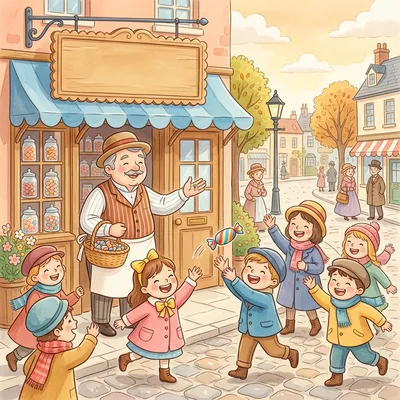
Robert Coltart boiled aniseed sweets in Melrose and hawked them round the market towns of the Scottish Borders, and he wrote this song to sell them. He sang it at his stall. Children who heard it went home humming the name of the product, which is exactly what a jingle is supposed to do.
The advertisement outlasted the advertiser, the shop and the sweet. "Ally Bally Bee" is now one of the best known songs in Scotland and is sung to babies at bedtime by people who have never tasted aniseed candy and have no idea they are reciting a sales pitch. That is a genuinely funny fate for a piece of marketing.
Origins
Coltart was born in 1832 and worked as a weaver in Galashiels before he turned to confectionery. He made his candy in Melrose and carried it in a basket around the Border towns on market days, singing the verses as his pitch. He died on 2 April 1880.
That date matters, because the dating you will see most often is wrong. Songbooks, record sleeves and websites routinely file the song under "c. 1880s", but Coltart was dead by the second week of that decade and had been singing to customers for years before it. The honest dating is mid to late nineteenth century, and before 1880.
He is buried in Eastlands Cemetery in Galashiels, and a statue of him stands in the town centre. The spelling of the song title drifted away from his name somewhere along the way: the man was Coltart, the candy in the chorus is Coulter's.
Meaning & Interpretation
The chorus is a picture of Coltart's actual customers. A child sits on its mother's knee, crying for a halfpenny to spend at the stall, and the mother has to decide whether to find one. This is a song about children with no money for sweets, written by the man who wanted their halfpennies, and it is affectionate rather than sad.
The second verse brings the seller into view, coming round the corner with the basket balanced on his head. The third is straight product advertising and is very cheeky about it: skinny wee Jeannie, all bones under her skin, is filling out nicely now she is sucking Coulter's candy. Aniseed sweets as a health food is a claim no confectioner would be allowed to make today.
The tune is slow, repetitive and built on a rocking rhythm, which is why it slid so easily from market patter into the nursery. Verses have been added by later singers during the twentieth-century folk revival, and the ones above are the core traditional set.
What do the Scots words mean?
ally bally - nonsense syllables used for dandling a child, with no literal meaning mammy - mother greetin' - crying, weeping bawbee - a small old Scottish coin, a halfpenny tae - to gie - give thrifty - savings; "gie me ma thrifty doon" is usually taken as asking for a coin from the money put by auld - old roon - round croon - the crown of the head puir wee - poor little, said with sympathy rather than pity affa - awfully, very a rickle o' banes - a loose heap of bones, meaning very thin ower - over noo - now sookin' - sucking
Was Coulter's Candy a real sweet?
Yes. It was an aniseed-flavoured boiled sweet made by Robert Coltart himself, sold from a basket at Border markets rather than from a shop. The recipe was his own and the song was the only advertising it had.
Why is an advertising jingle sung as a lullaby?
Because it sounds like one. The repeated chorus, the slow tune and the opening image of a child on its mother's knee all belong to the lullaby tradition, so families kept singing it long after the sweet stall was gone. Most Scottish singers learn it as a cradle song and only later find out what it was for.
Related Nursery Rhymes

Lyrics from nurseryrhymes.info