

Hickety, Pickety, My Black Hen
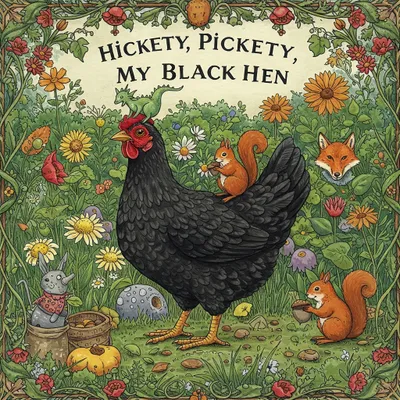


Lyrics
Hickety, pickety, my black hen, She lays eggs for gentlemen;
Gentlemen come every day To see what my black hen doth lay.
Hickety, pickety, my black hen, She lays eggs for gentlemen;
Sometimes nine, Sometimes ten, Hickety, pickety, my black hen
History and Meaning
A black hen lays so reliably that gentlemen call round every day to count her eggs, sometimes nine, sometimes ten. That is the whole of "Hickety, Pickety, My Black Hen," a short English rhyme that turns a productive farmyard hen into a minor local celebrity.
Origins
The rhyme is cataloged as number 13025 in the Roud Folk Song Index. It was first printed in London around 1765 in the famous collection Mother Goose's Melody. While some historical accounts suggest the rhyme might have older roots in European folklore, the 1765 publication remains the earliest documented written record. The song became popular in the United States and other English-speaking nations during the nineteenth century.
Meaning & Interpretation
On the surface, the verse describes a simple farmyard scene of egg collection. In early rural economies, hens were essential assets for families, and selling or trading fresh eggs was a common source of household income. The reference to gentlemen visiting daily suggests a regular trade of fresh produce.
From an educational perspective, the rhyme helps children practice counting to ten and introduces basic concepts of agriculture and trade. The nonsense phrase "hickety, pickety" serves as a phonetic tool that makes the rhythm memorable and engaging for young learners.
What is the origin of Hickety Pickety My Black Hen?
The rhyme is a traditional English counting song first printed around 1765 in the collection Mother Goose's Melody. It was used to entertain children and teach basic counting.
When was Hickety Pickety My Black Hen first published?
The earliest documented version of the rhyme appeared in print around 1765 in London, within the pages of Mother Goose's Melody.
Music Video
If the player is unavailable, watch this video on YouTube.
Related Nursery Rhymes



Lyrics from nurseryrhymes.info