

Kookaburra Sits in the Old Gum Tree


Lyrics
Kookaburra Sits in the Old Gum Tree was written by Marion Sinclair in 1932 and remains in copyright, enforced as recently as 2010, so the words are not reproduced here.
History and Meaning
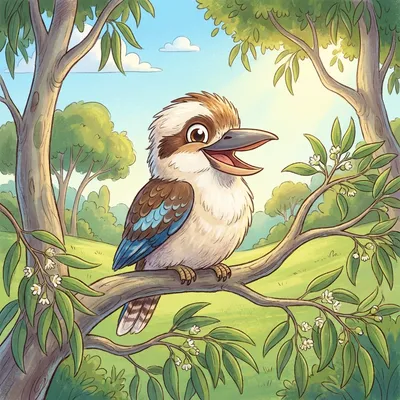
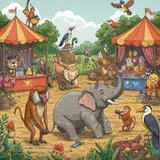
The kookaburra is a large Australian kingfisher whose call sounds like raucous human laughter, and this round turns that laugh into a singalong. Children sing it in overlapping parts, telling the bird to laugh, then to stop eating all the gumdrops, then to stop counting the singer as a monkey.
Origins
The song was written in 1932 by Marion Sinclair, a music teacher from Melbourne, Australia. In 1934, she submitted the song to a competition run by the Girl Guides Association of Victoria, which was searching for a typically Australian round. Sinclair's song won the competition and was first performed publicly that same year at the World Jamboree of the Girl Guides in Frankston, Victoria. The rights were sold to raise funds for the Girl Guides, helping them purchase a camping ground.
Meaning & Interpretation
The lyrics paint a playful picture of Australian wildlife, referencing the gum tree (eucalyptus) and the kookaburra's loud, laughing call. The subsequent verses are humorous additions where the bird is depicted eating gumdrops or counting monkeys. In the mid-twentieth century, the song spread globally through scouting camps, where its structure as a round made it an excellent tool for group singing.
Who wrote the "Kookaburra" song?
The song was written by Marion Sinclair in 1932. Sinclair was an active member of the Girl Guides and wrote the song as a contribution to the Australian scouting community.
What was the legal dispute involving the song "Kookaburra"?
Following Marion Sinclair's death, the publishing rights were acquired by Larrikin Music. In 2009, Larrikin Music filed a copyright infringement lawsuit against the Australian band Men at Work, claiming that the prominent flute riff in their famous 1981 hit song "Down Under" copied the melody of "Kookaburra." The court ruled in Larrikin's favor, finding that the band had indeed used a portion of the traditional melody.
Related Nursery Rhymes

Lyrics from nurseryrhymes.info