
Nobody Likes Me (Guess I'll Go Eat Worms)
Lyrics
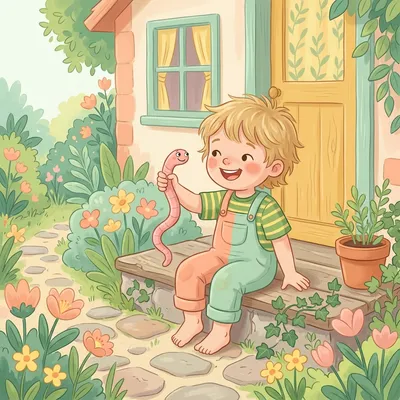
Nobody likes me, everybody hates me,Guess I'll go eat worms,Long thin slimy ones, short fat juicy ones,Itsy bitsy fuzzy wuzzy worms.
Down goes the first one, down goes the second one,Oh how they wiggle and squirm.Up comes the first one, up comes the second one,Oh how they wiggle and squirm.
History and Meaning
The joke is in the size of the sulk. A child announces that nobody likes them, that everybody hates them, and that the only reasonable response is to go and eat worms. Not one worm. A whole graded selection of them, sorted by length and thickness, eaten in front of an audience. The complaint is pitched so far past anything a real grievance would justify that it stops being a complaint and turns into a performance.
That is why you almost never hear this song from a child who is genuinely upset. It gets sung on school buses, in the back of cars, at camp, and in the queue for lunch, usually by children in a perfectly good mood who have discovered that pretending to be tragic is funny. The gloom is a costume.
Origins
Nobody knows who wrote it. This is a camp and playground song that spread by ear rather than by print, and there is no reliable first publication, named author, or date to point to. Songs that travel this way tend to leave no paper trail until long after they are already everywhere, and this one has left almost none.
What survives instead is the pattern of the song itself. It circulates across the English-speaking world in a large number of versions, with different worms, different eating methods, and different endings, and no version can claim to be the original because there is no documented original to compare them against. Some sources online give confident dates and first printings for it. Those claims do not hold up when you look for the source behind them, so they are best treated as guesswork.
Meaning & Interpretation
The song is a parody of self-pity, and children perform it as one. The opening line states the grievance in the broadest possible terms, "nobody" and "everybody", which is exactly how a small child describes being left out of a game for four minutes. The proposed remedy, worms, is comic overkill. It is the singer punishing an unfeeling world by damaging only themselves, which is the essential shape of a sulk, exaggerated until it is visible.
The second half is straightforward gross-out humour. Worms are catalogued by texture, swallowed, and in most versions they come back up again, still wiggling. Children somewhere between about five and nine find deliberate disgust hilarious, and this song serves it in a tidy, rhythmic package that adults will tolerate because it is old and familiar. There is nothing deeper going on with the worms. They are there because they are revolting.
There is a small useful side effect. A child who actually does feel left out has a way to say so out loud and get a laugh instead of sympathy, which is often the preferred outcome at that age.
Is it a sad song?
No. It is a comic song about pretending to be sad. The self-pity is deliberately overplayed so that it reads as a joke, and children sing it when they are cheerful rather than when they are miserable. If your child is singing about eating worms, it is a good sign rather than a worrying one. On the rare occasion a child does use it to voice a real complaint, the humour is doing the work of making the complaint sayable.
Why do children find eating worms funny?
Disgust is one of the earliest kinds of humour children control on purpose. Sorting worms into long thin slimy ones and short fat juicy ones, then swallowing them, breaks a clear rule about what goes in a mouth, and breaking that rule in a song is safe, repeatable, and gets a reaction from every adult in earshot. The rhythm helps too, since the escalating list gives the singer somewhere to build to.
Are there different versions of the words?
Many, and no single set is the correct one. Verses vary widely in how the worms are described and eaten, some versions bring them back up while others end with the singer thriving on worms three times a day, and the number of verses shifts from group to group. Regional variants circulate in Britain, Australia, and North America, sometimes opening with "nobody loves me" rather than "nobody likes me". Whichever version a child brings home from school is the real one as far as that playground is concerned.
Related Nursery Rhymes


Lyrics from nurseryrhymes.info