

Nose, Nose, Jolly Red Nose


Lyrics
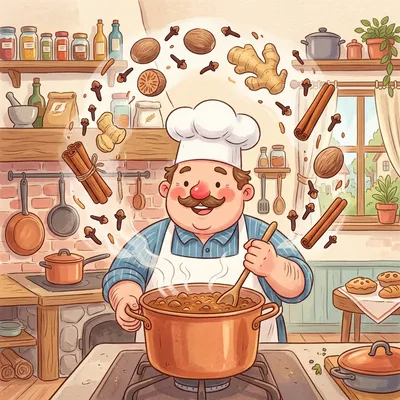
Nose, nose, jolly red nose,And what gave thee that jolly red nose?Nutmeg and ginger, cinnamon and cloves,And that gave me my jolly red nose.
History and Meaning
Four spices answer the question. Someone asks where the red nose came from, and the reply arrives with a straight face: nutmeg, ginger, cinnamon and cloves. The joke needs a little unpacking four centuries on. Those spices were what you stirred into a hot drink, and it was the drink rather than the seasoning that coloured the man's face. Jacobean listeners caught it at once, which is why the verse turns up in a songbook and in a comedy at almost the same moment.
It is one of the shortest rhymes in the English collection, built as a call and an answer. That structure is why it survived. A question, a list of four things, a repeat of the opening phrase, and it is done.
Origins
The printed source is Thomas Ravenscroft's Deuteromelia, or The Second Part of Musicks Melodie, published in London in 1609. The nose verse sits inside a longer piece that opens "Of all the birds that ever I see, the owl is the fairest in her degree", filed among what Ravenscroft called freemen's songs. The owl and the red nose have nothing much to do with each other. They were simply parts of the same drinking song, and the second half is the half that outlived the first.
The rhyme was also sung on stage. Francis Beaumont's comedy The Knight of the Burning Pestle uses it in the first act, in the form "Nutmegs and ginger, cinnamon and cloves, And they gave me this jolly red nose." The play was performed at the Blackfriars playhouse around 1607 and printed in 1613. Two things are worth keeping straight here, because reference books often blur them. The play is Beaumont's alone, not a Beaumont and Fletcher collaboration, despite the pair's name being attached to so much of the period's drama. And the 1609 date belongs to Ravenscroft's book, not to the play.
The two appearances are close enough in time that neither copied the other. The song was already in the air, which is exactly what made it useful to Beaumont. His comedy is stuffed with tunes the audience would have known, so a character singing a familiar tavern verse got a laugh of recognition before any of the words landed.
Ravenscroft was a young man doing something unusual. Probably born around 1588, a chorister at St Paul's as a boy and a Cambridge graduate by 1605, he spent his early twenties collecting the rounds, catches, street cries and tavern songs that ordinary Londoners actually sang, then printing them. Almost none of it would have survived otherwise. He issued Pammelia and Deuteromelia in 1609 and Melismata in 1611. Three Blind Mice makes its first known appearance in the same Deuteromelia volume as the red nose, and Hey, Ho, Nobody Home comes from Pammelia. His name is rarely attached to any of them now.
Meaning & Interpretation
The four spices are the point of the joke, and in 1609 they were not ordinary kitchen items. Nutmeg and cloves came from a handful of small islands in what is now Indonesia, cinnamon from Ceylon, ginger from Asia by way of long and contested sea routes. Prices were high and supply was controlled by whoever held the trade that decade. A spiced drink was an occasional treat rather than a daily habit.
That gives the answer a second edge. The man with the red nose is naming expensive things, which is either a boast or a dodge depending on how you hear it. Modern singers usually take the list at face value and leave it there, which suits a rhyme this short. The repeated word "nose" at the opening does most of the work for young children, and the four spice names are a small vocabulary lesson attached to a tune.
What does "jolly red nose" mean?
It describes a nose flushed red, and in the original song the redness comes from warming spiced drink rather than from cold weather. The word "jolly" signals that the whole exchange is teasing rather than critical. By the time the verse reached nursery collections, most singers read it simply as a description of a rosy face.
Who was Thomas Ravenscroft?
Thomas Ravenscroft was an English musician and editor, born around 1588 and dead by about 1635, who published three collections of popular songs in his early twenties. Pammelia and Deuteromelia both appeared in 1609, followed by Melismata in 1611. Because he wrote down rounds, catches and tavern songs that nobody else thought worth printing, a large slice of ordinary Jacobean singing survives only through him.
Was this rhyme really sung in a Shakespeare-era play?
Yes. It appears in the first act of Francis Beaumont's The Knight of the Burning Pestle, a comedy performed around 1607 and printed in 1613, during the years Shakespeare was still writing. Beaumont's play parodies the popular theatre of its day and uses well known songs throughout, so his audience would have recognised the verse rather than hearing it for the first time.
Related Nursery Rhymes





Lyrics from nurseryrhymes.info