
Once I Saw a Little Bird


Lyrics
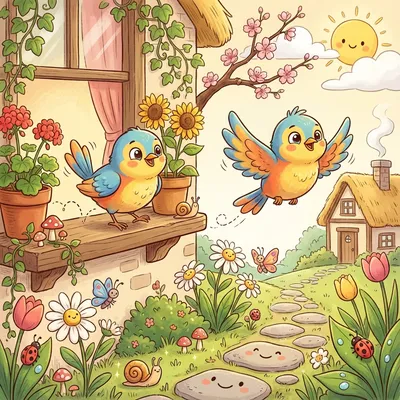
Once I saw a little birdCome hop, hop, hop;So I cried, "Little bird,Will you stop, stop, stop?"
And was going to the windowTo say, "How do you do?"But he shook his little tail,And far away he flew.
History and Meaning
A child spots a bird hopping nearby, calls out for it to stop, and heads to the window to say hello, but the bird shakes its tail and flies off. "Once I Saw a Little Bird" is that small, gentle disappointment, set to a hop-hop-hop rhythm toddlers can act out.
Who wrote the nursery rhyme Once I Saw a Little Bird?
The author of the rhyme is unknown, as is common with many traditional folk rhymes. It was first published in print in 1842 by the English scholar James Orchard Halliwell in his anthology The Nursery Rhymes of England. Halliwell collected the verse from oral traditions, indicating it was recited by families long before it was printed.
What is the meaning and interpretation of the rhyme?
The rhyme describes a child spotting a hopping bird, trying to talk to it, and the bird immediately flying away. This simple story teaches a gentle lesson about wildlife:
- Independence of Nature: It shows children that wild animals are independent creatures that cannot be easily tamed or controlled.
- Respect for Animals: It encourages kids to observe animals from a distance rather than trying to capture or touch them, promoting empathy and respect for nature.
What is the educational value of Once I Saw a Little Bird?
The rhyme is widely used in early childhood education for several developmental benefits:
- Vocabulary building: It introduces children to active verbs like "hop," "stop," and "flew."
- Motor Skills: Teachers often pair the rhyme with physical actions, encouraging children to mimic the hopping bird or the flapping wings when it flies away.
- Interactive Play: The question-and-answer format in the lyrics makes it easy to perform as a brief role-play game.
Related Nursery Rhymes

Lyrics from nurseryrhymes.info