

Rock-a-bye Baby


Lyrics
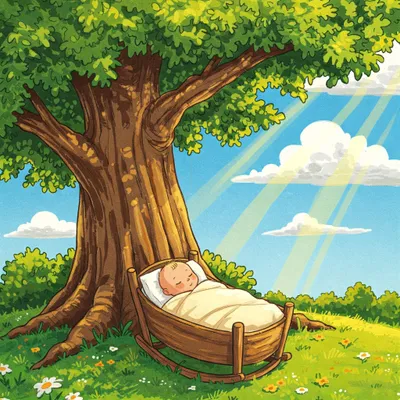
Rock a bye baby on the tree top,When the wind blows the cradle will rock,When the bough breaks the cradle will fall,And down will come baby, cradle and all.
History and Meaning
For a lullaby, "Rock-a-bye Baby" ends badly: the bough breaks and down comes baby, cradle and all. The soothing tune carries one of the bleaker images in the nursery, which is exactly why people keep inventing back-stories for it, from windblown birch cradles to the disputed heir of James II.
Origins
The earliest documented version of the rhyme was published around 1765 in London in the collection Mother Goose's Melody. A similar version beginning with "Hush-a-by baby on the tree top" was printed in Boston in 1785. The modern title of the song was established in 1805 in Benjamin Tabart's compilation, Songs for the Nursery. While the lyrics are English, the famous melody associated with the song today was composed by American musician Effie I. Canning and published in 1886.
Meaning & Interpretation
There are several popular theories regarding the song's imagery. One common theory suggests that early American colonists observed Native American mothers suspending birch-bark cradles from tree branches, allowing the wind to rock their infants. Another political interpretation views the song as a seventeenth-century allegory about the child of King James II, who was rumored to be a changeling smuggled into the palace to secure a Catholic heir. In this reading, the wind and the breaking bough represent the political instability that led to the Glorious Revolution of 1688.
A local legend in Derbyshire, England, connects the rhyme to a family that lived in a hollowed-out yew tree, where the children slept in a suspended cradle. Regardless of its historical inspiration, the song remains a classic tool for soothing children to sleep.
What is the origin of the Rock-a-bye Baby lullaby?
The lullaby was first printed around 1765 in London within Mother Goose's Melody. The familiar modern tune was composed in 1886 by American musician Effie Canning.
Why does the cradle fall in Rock-a-bye Baby?
In the lullaby, the cradle falls because the tree bough breaks. Historically, this dramatic ending served as a metaphorical cautionary tale in traditional parenting songs.
Music Video
If the player is unavailable, watch this video on YouTube.
Free Printable Coloring Page
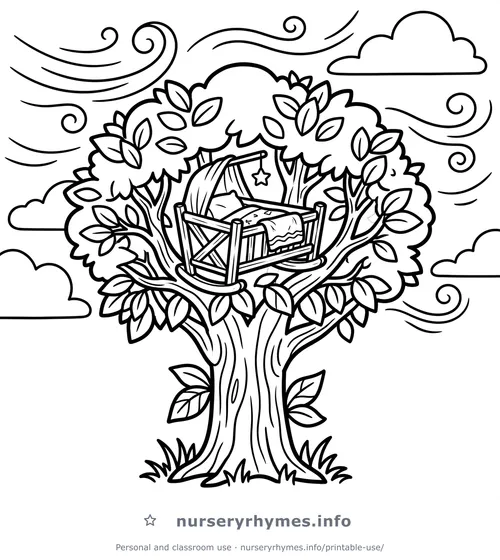
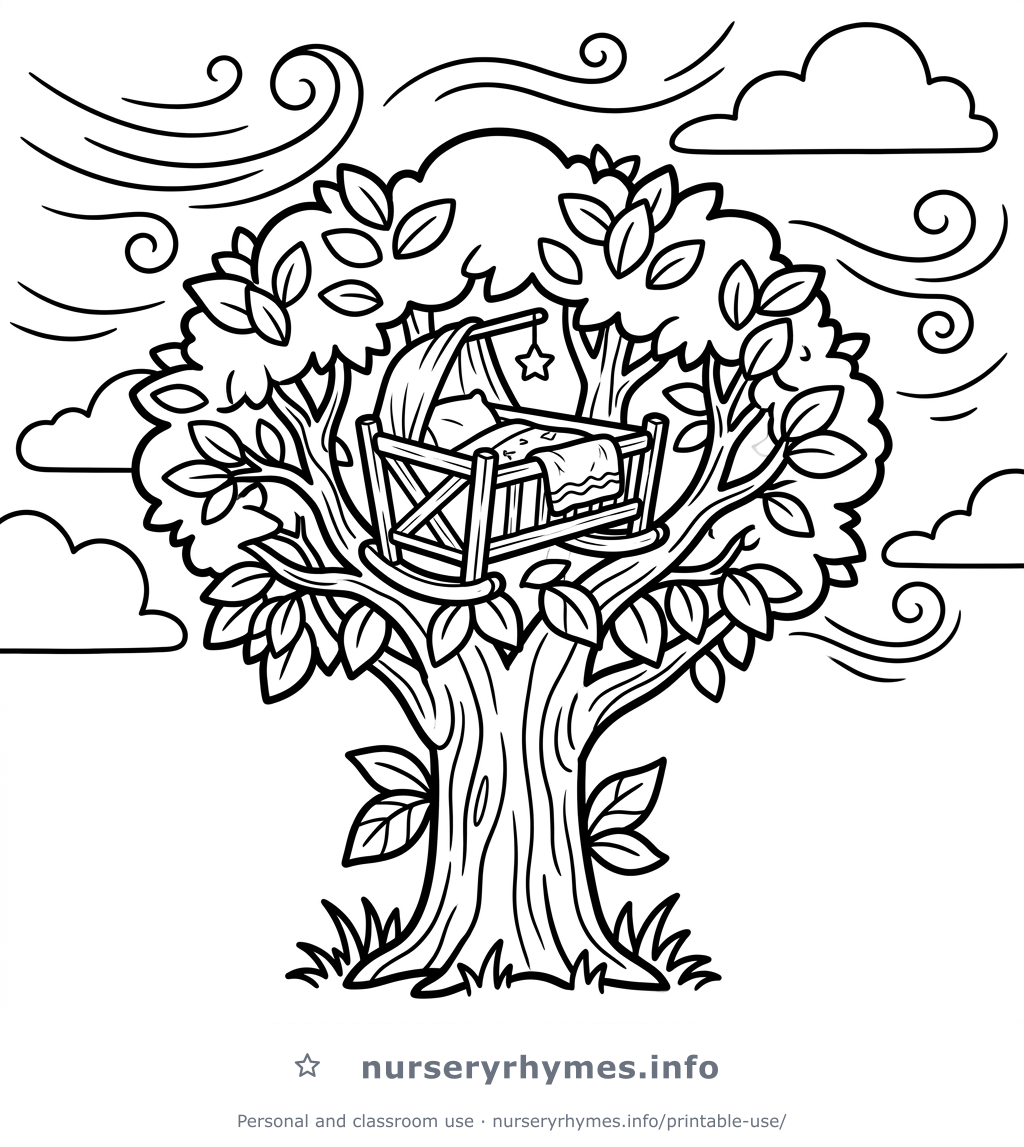
Print this Rock-a-bye Baby coloring sheet for free and let little ones bring it to life with crayons or pencils.
Full-resolution PNG · Fits the paper size selected in your print dialog · Personal and classroom use
Related Nursery Rhymes





Lyrics from nurseryrhymes.info