

Early One Morning

Lyrics
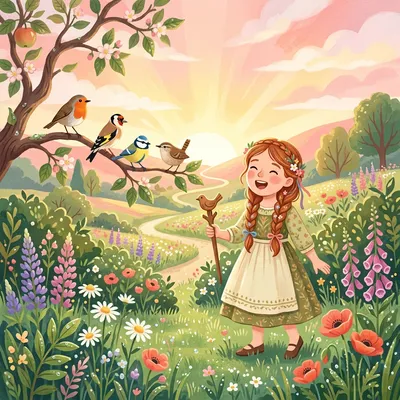
Early one morning, just as the sun was rising,I heard a maiden singing in the valley below."Oh, don't deceive me, oh, never leave me,How could you use a poor maiden so?"
"Remember the vows that you made to your Mary,Remember the bower where you vowed to be true.Oh, don't deceive me, oh, never leave me,How could you use a poor maiden so?"
Thus sang the poor maiden, her sorrows bewailing,Thus sang the poor maid in the valley below."Oh, don't deceive me, oh, never leave me,How could you use a poor maiden so?"
History and Meaning
Almost everyone in England knows the tune. Far fewer have looked at the words. "Early One Morning" is sung in primary schools as a bright, easy melody about sunrise and a valley, and the actual subject is a young woman crying in that valley because a man promised to marry her and left. The refrain is a direct accusation: how could you use a poor maiden so?
That gap between the cheerful tune and the unhappy text is the most interesting thing about the song, and it is the sort of thing a parent notices halfway through the second verse.
Origins
The song is long established in English tradition. It appears widely in nineteenth-century printed collections and in school songbooks well into the twentieth century, but its earliest text is not firmly established, and dates given for a first printing should be treated with caution. What survives are the traces the song left as it travelled.
One of those traces is a broadside ballad sheet held in the Bodleian Library at Oxford, printed under the title "The Lamenting Maid". In that version the young man does not simply wander off; he leaves to go to sea, which is one of the standard ways a lover disappears in English balladry. Broadsides were cheap single sheets sold on the street, and they are often the first written record of a song that had already been sung for years.
The other trace is the antiquarian William Chappell, who printed the melody in his mid nineteenth-century collections of English airs. Chappell was interested in what ordinary people actually sang rather than what was fashionable in concert rooms, and he named this as one of the most popular songs among servant-maids, saying he had heard it from women who came from Leeds, Hereford, Devonshire and the districts around London. That is a useful detail. It puts the song in kitchens and sculleries across the country, sung by exactly the young working women whose situation the words describe.
From there it moved into schools. Editors assembling songbooks for classroom singing wanted melodies that were short, singable in unison and free of anything scandalous. This one qualified, because the complaint is gentle. There is no seduction described, no pregnancy, no revenge, no death. Harsher songs on the same theme, and there are many, did not make it past the editors. This one did, and several generations learned it before they were old enough to know what it was about.
Meaning & Interpretation
It is a lover's complaint, a very old form in English song. The singer is a witness rather than a participant. He or she passes at dawn, hears a woman singing in the valley below, and reports her words. That framing device keeps a small distance between the listener and the grief, which softens the whole thing.
The woman's charge is breach of promise. "Remember the vows that you made to your Mary" refers to a private engagement, which in the period the song comes from carried real weight, social and sometimes legal. To be jilted after such a promise was not only heartbreak. It could damage a young woman's standing and her prospects. The word "use" in the refrain is the sharpest thing in the text: she is saying she was treated as something to be used and then put down.
The tune runs counter to all of this. It rises at the start, moves in easy steps and resolves comfortably, which is why it works so well for children and why it has been arranged endlessly for choirs, brass bands and orchestras. Sung slowly by an adult, with the words meant, it sounds like a different song entirely.
What does "oh, don't deceive me" mean?
She is telling the man not to lie to her, and by the point she sings it, he already has. "Deceive" here means breaking a promise of marriage rather than telling a small untruth. The line that follows, "how could you use a poor maiden so", spells out the complaint: he made vows, he broke them, and she is left to carry it.
Is Early One Morning a children's song?
Not originally. It is an adult folk song about being jilted, and it reached children through school songbooks, which selected it for its easy tune and its mild language. Plenty of children sing it happily without registering the story, which is fine. If a child does ask, the honest answer is that it is a song about someone whose sweetheart broke a promise.
Why was Early One Morning played on BBC Radio 4?
It opened the BBC Radio 4 UK Theme, an orchestral medley of British and Irish airs compiled by Fritz Spiegl and arranged by Manfred Arlan. The theme played at the start of Radio 4's broadcasting day from November 1978 until April 2006, beginning with brass sounding the first bars of "Early One Morning" before moving into "Rule, Britannia!" and other tunes. Its removal in 2006 prompted a public campaign to bring it back.
Related Nursery Rhymes





Lyrics from nurseryrhymes.info