

Higglety Pigglety Pop


Lyrics
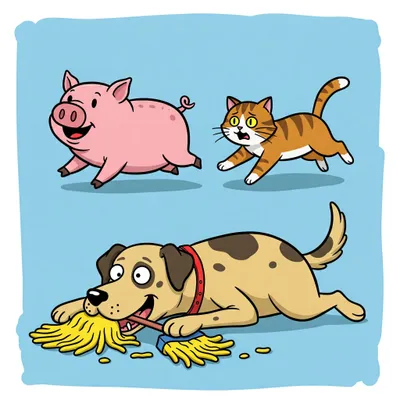
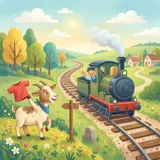
Higglety, pigglety, pop!The dog has eaten the mop;The pig's in a hurry,The cat's in a flurry,Higglety, pigglety, pop!
History and Meaning
"Higglety, Pigglety, Pop!" is a traditional American nonsense verse that delights children with its absurd situations and quick, bouncing rhythm. Featuring a household thrown into sudden chaos with a dog eating a mop, a pig in a hurry, and a cat in a flurry, the rhyme is a classic example of pure phonetic fun designed to make kids laugh.
The poem is written in a lively dactylic dimeter rhythm, which means each line contains two beats that carry the listener along at a rapid pace.
Origins
The verse was first published in 1846 in the American children's periodical Robert Merry's Museum, edited by Samuel Griswold Goodrich under the pen name Peter Parley. While often assumed to be an old English nursery rhyme because of its style, historical evidence confirms its nineteenth-century American origin. Goodrich designed the poem to teach children about rhythm and meter through humorous, nonsensical imagery.
Meaning & Interpretation
There is no hidden historical event or political commentary behind this rhyme. It is a work of literary nonsense meant for pure entertainment. The humor comes from the sheer impossibility of the scenario, especially the dog eating a household mop. The rhyme shows how everyday animals can behave in bizarre ways, creating a miniature drama that resolves as quickly as it begins. In the mid-twentieth century, the rhyme achieved a new level of fame when it inspired the famous children's author and illustrator Maurice Sendak to write his 1967 book Higglety Pigglety Pop! or There Must Be More to Life, which followed the adventures of a Sealyham Terrier named Jennie.
When was Higglety Pigglety Pop first published?
The rhyme was first published in 1846 in the American children's magazine Robert Merry's Museum, which was created and edited by Samuel Griswold Goodrich.
What is the connection between Higglety Pigglety Pop and Maurice Sendak?
Maurice Sendak used the title of the traditional nursery rhyme for his 1967 children's book Higglety Pigglety Pop! or There Must Be More to Life. The book tells the story of his real pet dog Jennie, who leaves home to find something more in life.
Music Video
If the player is unavailable, watch this video on YouTube.
Related Nursery Rhymes


Lyrics from nurseryrhymes.info