

The Green Grass Grew All Around


Lyrics
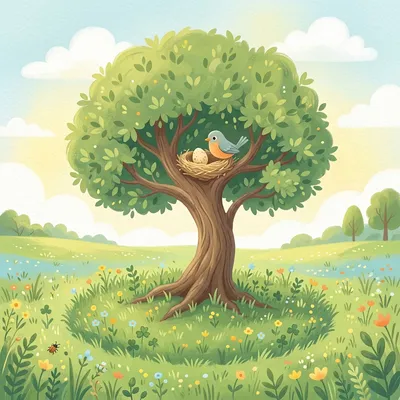
There was a hole in the middle of the ground,The prettiest hole that you ever did see.Well, a hole in the ground,And the green grass grew all around, all around,And the green grass grew all around.
And in this hole there was a tree,The prettiest tree that you ever did see.Well, a tree in a hole, and a hole in the ground,And the green grass grew all around, all around,And the green grass grew all around.
And on this tree there was a branch,The prettiest branch that you ever did see.Well, a branch on the tree, and a tree in a hole,And a hole in the ground,And the green grass grew all around, all around,And the green grass grew all around.
And on this branch there was a twig,The prettiest twig that you ever did see.Well, a twig on the branch, and a branch on the tree,And a tree in a hole, and a hole in the ground,And the green grass grew all around, all around,And the green grass grew all around.
(The song continues in the same pattern: a nest on the twig,an egg in the nest, a bird in the egg, a wing on the bird,and a feather on the wing.)
History and Meaning
Most people meet this song at summer camp or in a school hall, shouted rather than sung, with everybody racing to get the chain out before the breath runs out. It has a paper trail that camp songs usually lack. Sheet music was published in New York in 1912 with words by William Jerome and music by Harry Von Tilzer, issued by Von Tilzer's own publishing company, and Walter Van Brunt recorded it the following year.
That commercial credit sits on top of something much older. The cumulative chain, the "prettiest thing that you ever did see" line, and the grass refrain all come from an English folk song usually called "The Tree in the Wood", collected long before any Tin Pan Alley office existed. So the 1912 hit is a professional polish on borrowed timber.
Origins
The folk parent was printed in 1877 by Marianne Harriet Mason, a watercolour painter and song collector, in her book Nursery Rhymes and Country Songs. Her version was already titled "Green Grass Grows all Around", which shows the refrain was in oral circulation decades before the copyright date on the sheet music. Folklorists file the whole family as Roud 129, and the index holds around 180 versions taken down from singers in English alone, with relatives in French, German and Italian. Other titles in the same cluster include "The Everlasting Circle", "The Tree on the Hill" and "Down in the Lowlands".
Harry Von Tilzer was one of the busiest men in American popular music. Born Aaron Gumbinsky in Detroit in 1872, he ran away with a circus at fourteen, reached New York in 1892, and later claimed to have written more than 8,000 songs. His 1900 number "A Bird in a Gilded Cage" was one of the biggest sellers of its era. His brother Albert wrote the music for Take Me Out to the Ball Game, so the family had a hand in two songs Americans still sing without being asked.
The Irish song The Rattlin' Bog belongs to the same Roud 129 family. It runs a different chain, bog to tree to branch to nest to egg to bird, and keeps a bouncier refrain, but the machinery is identical.
Meaning & Interpretation
There is no hidden story. The song is a memory game dressed as a nature picture, and the point is the recitation itself. Each verse adds one item, then rewinds the whole list backwards to the hole in the ground, so the last verse is nine links long and takes real lung capacity.
To run it with a group, sing the new line yourself and have the children echo it, then bring everyone in together for the chain and the refrain. Younger classes can stop at the bird. Older ones enjoy the speed-up: repeat the final verse a little faster each time until it falls apart, which is usually the moment the room decides the song was worth it. Hand gestures help the sequence stick, one shape per item, a circle for the hole, arms up for the tree, flapping for the bird.
Who wrote The Green Grass Grew All Around?
The 1912 sheet music credits the words to William Jerome and the music to Harry Von Tilzer, published by the Harry Von Tilzer Music Publishing Company in New York. They did not invent it. Both borrowed heavily from the traditional English song "The Tree in the Wood", a version of which Marianne Harriet Mason had already printed in 1877 under the title "Green Grass Grows all Around".
What is the order of the verses?
The usual American order runs hole, tree, branch, twig, nest, egg, bird, wing, feather. Each new verse names its item, then lists everything already collected in reverse before returning to the refrain. Versions vary, and some singers add a leaf, a flea or a bug at the end, so pick one order and hold to it or the group will scatter.
Is it the same song as The Rattlin' Bog?
They are two branches of one family, catalogued together as Roud 129. See The Rattlin' Bog for the Irish side. Both build a chain of nested objects and hurl the whole list back at the audience every verse. The Rattlin' Bog is Irish, faster, and starts in a bog rather than a hole; the American version has the green grass refrain and the 1912 publishing credit attached to it.
Related Nursery Rhymes





Lyrics from nurseryrhymes.info