

The Keeper

Lyrics
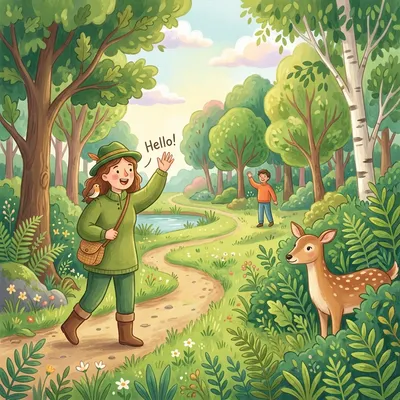
The keeper did a-hunting go,And under his cloak he carried a bow,All for to shoot a merry little doe,Among the leaves so green O.
Chorus
Jackie boy!Master?Sing ye well?Very well.Hey down, ho down, derry derry down,Among the leaves so green O.To my hey down down, to my ho down down,Hey down, ho down, derry derry down,Among the leaves so green O.
The first doe he shot at he missed,The second doe he trimmed he kissed,The third doe went where nobody wist,Among the leaves so green O.
The fourth doe she did cross the plain,The keeper fetched her back again,Where she is now she may remain,Among the leaves so green O.
The fifth doe she did cross the brook,The keeper fetched her back with his crook,Where she is now you may go and look,Among the leaves so green O.
The sixth doe she ran over the plain,But he with his hounds did turn her again,And it is there he did hunt in a merry, merry vein,Among the leaves so green O.
History and Meaning
"The Keeper" is a hunting song built as an argument. One singer gets four lines about a gamekeeper and his bow, and then a second voice cuts in with "Jackie boy!", gets answered with "Master?", and the whole thing collapses into a run of nonsense syllables before anyone can draw breath. That interruption is the point. It is why the song outlasted almost every other hunting song in the British school repertoire, and why it still works around a campfire with people who have never heard it before.
The version printed in songbooks is a tidied one. Traditional sets of the song carry a bawdy second meaning, with the pursued doe standing in for a woman, and the text was edited before it went anywhere near a classroom.
Origins
The oldest known ancestor is a black-letter broadside of fifteen verses called "The Huntsman's Delight; or, The Forester's Pleasure", credited to Joseph Martin and printed in the mid-1680s. In the eighteenth century a shorter six-verse version appeared under the title "The Frolicksome Keeper", and that text already contains the dialogue chorus that later turned up again and again in oral tradition. So the back-and-forth is not a schoolroom invention. It was in the song at least 300 years ago.
Cecil Sharp noted a version from Robert Kinchin at Ilmington in Warwickshire in 1909, and it was printed in his collection of English folk songs. The song is catalogued as Roud 1519, which groups together the many variants collected across England under titles including "A Keeper Went Hunting" and "The Keeper Did A-Hunting Go".
Sharp edited the words before including the song in Novello's School Songs. He was, at the time, arguing hard that English folk song belonged in the state school curriculum, and the 1906 collection he made with Sabine Baring-Gould, "English Folk-Songs for Schools", was assembled specifically to meet Board of Education requirements. Songs collected from singers in villages were routinely altered where the collectors judged the originals unsuitable for children. "The Keeper" got that treatment, and the cleaned version is the one that reached several generations of British schoolchildren.
Meaning & Interpretation
On the surface the story is simple and slightly odd. A gamekeeper, whose actual job is to protect the game and catch poachers, goes out with a bow hidden under his cloak. The concealment is deliberate in the text. He is doing something he should not be doing, which is part of the joke.
Then the counting begins. Six does, each one handled differently: missed, kissed, vanished where nobody knew, fetched back across the plain, fetched back from the brook with a crook, turned again by the hounds. The verses are a list, which makes them easy to add to, easy to drop, and easy to remember. Most performances use four or five of them and nobody minds.
What does the refrain mean?
Almost none of it means anything literal. "Jackie boy" and "Master" are simply a call and its answer, two singers checking in with each other, and "Sing ye well? Very well" is the pair agreeing to carry on. "Hey down, ho down, derry derry down" is a stock burden that appears across a great many English ballads, filler syllables that give the singers something rhythmic to shout together. Only the last line, "Among the leaves so green O", carries an image, and it does the work of placing the whole song in a wood.
How do you sing The Keeper as a call and response?
Split the singers into two groups, or use one leader against everybody else. The leader sings the four verse lines alone. At the chorus the leader calls "Jackie boy!" and the group answers "Master?"; the leader calls "Sing ye well?" and the group answers "Very well." Everyone joins in for the "Hey down, ho down, derry derry down" lines and the "Among the leaves so green O" that closes them. Then the leader starts the next verse alone and the pattern repeats. The four short exchanges are quick, so the answering group has to stay alert, which is exactly what keeps a room of children paying attention.
Why is The Keeper in so many British school songbooks?
Because Cecil Sharp put it there. His edited text went into Novello's School Songs during the period when folk song was being pushed into English state school music, and school collections copied from one another for decades afterwards. Once a song is printed in a widely used songbook it tends to stay in the repertoire regardless of whether teachers know anything about its origins, and "The Keeper" had the additional advantage of a chorus that teaches itself in one hearing.
Related Nursery Rhymes



Lyrics from nurseryrhymes.info