
The Land of Nod


Lyrics
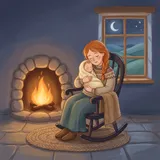
From breakfast on through all the dayAt home among my friends I stay,But every night I go abroadAfar into the land of Nod.
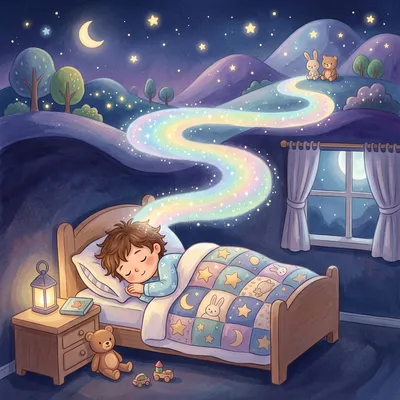
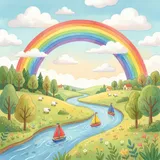
All by myself I have to go,With none to tell me what to do,All alone beside the streamsAnd up the mountain-sides of dreams.
The strangest things are there for me,Both things to eat and things to see,And many frightening sights abroadTill morning in the land of Nod.
Try as I like to find the way,I never can get back by day,Nor can remember plain and clearThe curious music that I hear.
History and Meaning
"Off to the land of Nod" is still a common way of telling a child it is bedtime, and the phrase is older than Stevenson. He took a piece of nursery slang and treated it literally, as an actual country with streams and mountains that the sleeper visits and cannot revisit on purpose.
Origins
The poem appeared in A Child's Garden of Verses in 1885. The phrase it plays on is a pun with a long history. In the Book of Genesis, Cain settles "in the land of Nod, on the east of Eden", a real place-name in the text. English speakers noticed the resemblance to nodding off, and by the eighteenth century the land of Nod was being used jokingly to mean sleep. Jonathan Swift used the joke in print in the 1730s.
Stevenson keeps the pun quietly in the background. Nothing in the poem mentions Genesis; it just takes the sleep meaning at face value and maps it.
Meaning & Interpretation
The poem is built on one contrast. Daytime is populated and supervised: at home, among friends. Night is solo travel with nobody giving instructions, which the child presents as a plain fact rather than a treat.
Stevenson does not sentimentalise the trip. The third verse gives equal weight to strange things to eat and see and to "many frightening sights", which is closer to how children actually experience dreaming than most bedtime poetry allows. The last verse lands on the real frustration: dreams cannot be found on purpose, and the music does not survive waking up.
Where does the phrase "land of Nod" come from?
It began as a place-name in Genesis, where Cain goes to live in the land of Nod east of Eden. English writers turned it into a pun on nodding off, and by the 1700s it was a joking term for sleep. Swift used it that way in the 1730s, well before Stevenson.
Is The Land of Nod about nightmares?
Partly. The poem mentions "many frightening sights abroad" alongside the strange things to eat and see, so it acknowledges bad dreams without dwelling on them. Stevenson treats fear as one ordinary feature of the dream country rather than the subject of the poem.
Why can't the child get back to the land of Nod by day?
That is the point the poem closes on. Dreams cannot be entered deliberately or recalled accurately once you wake, and the child finds this genuinely annoying. Stevenson ends on the "curious music" that fades before it can be remembered.
Related Nursery Rhymes
Lyrics from nurseryrhymes.info