

Too-Ra-Loo-Ra-Loo-Ral


Lyrics
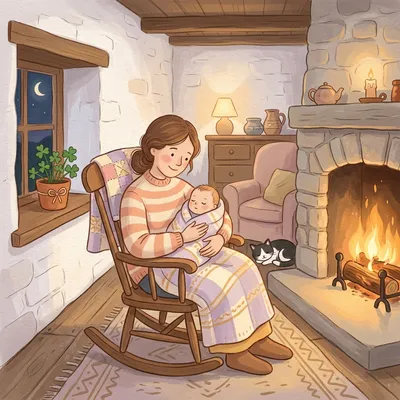
Over in Killarney, many years ago,Me mother sang a song to me in tones so sweet and low.Just a simple little ditty, in her good old Irish way,And I'd give the world if she could sing that song to me this day.
Too-ra-loo-ra-loo-ral, too-ra-loo-ra-li,Too-ra-loo-ra-loo-ral, hush now, don't you cry.Too-ra-loo-ra-loo-ral, too-ra-loo-ra-li,Too-ra-loo-ra-loo-ral, that's an Irish lullaby.
Oft in dreams I wander to that cot again,I feel her arms a-hugging me as when she held me then.And I hear her voice a-humming to me as in days of yore,When she used to rock me fast asleep outside the cabin door.
History and Meaning
This song is not an old Irish folk lullaby. It was written in 1913 by James Royce Shannon, an American songwriter, for a Tin Pan Alley stage show called "Shameen Dhu". That surprises almost everyone, because the song sounds ancient and because so many families sing it as an heirloom passed down from an Irish grandmother. The full title on the sheet music is "Too-Ra-Loo-Ra-Loo-Ral (That's an Irish Lullaby)", which is why it turns up in songbooks under both names.
None of that makes it a lesser lullaby. It is a beautiful, slow, easy tune to sing over a cot, and the fact that a professional songwriter built it that way in an office in America is simply the true story rather than the assumed one.
Origins
Shannon wrote the song for "Shameen Dhu", a musical play that opened in New York on 2 February 1914. The Irish-American tenor Chauncey Olcott, who starred in the show, had already recorded it for Columbia on 30 July 1913, and the record sold well before audiences ever saw the play.
It belongs to a specific commercial moment. In the years around 1910, American publishers on Tin Pan Alley turned out a stream of sentimental Irish songs aimed at Irish-American audiences and at the wider public who enjoyed the sound of them. "When Irish Eyes Are Smiling" came out of the same scene in 1912, also with Olcott attached. These songs looked back at an Ireland of cabin doors and green hills that most of their buyers had never seen, or had left decades earlier. The homesickness in the lyric is real enough; the setting is stage scenery.
The song became a genuine standard thirty years later. Bing Crosby sang it as Father O'Malley in the 1944 Paramount film "Going My Way", and his Decca recording, released that September, reached number four on the Billboard chart and sold more than a million copies. After that, it stopped being a period piece and became the Irish lullaby, sung at wakes, weddings, christenings and every St Patrick's Day since.
Meaning & Interpretation
The words are not really addressed to a baby. The singer is a grown adult remembering a mother who sang to them long ago, wishing they could hear her voice one more time. "I'd give the world if she could sing that song to me this day" is a line about loss, not about bedtime. Only the chorus, with its "hush now, don't you cry", speaks to a child at all.
That double perspective is why the song works at both ends of life. Parents use it to settle an infant, and the same tune shows up at funerals, where the adult meaning comes forward. The emigrant subtext sits underneath: the mother is over in Killarney, and the singer is somewhere else entirely.
Is Too-Ra-Loo-Ra-Loo-Ral a real Irish folk song?
No. It was composed in 1913 by James Royce Shannon, an American songwriter, for the American stage show "Shameen Dhu", and it has no traditional Irish source. People assume otherwise because the lyric names Killarney, uses stage-Irish spellings, and was popularised by Irish-American singers. It has since been adopted so widely by Irish and Irish-American families that it functions as a folk song in practice, but its origin is commercial and American.
What does "too-ra-loo-ra-loo-ral" mean?
Nothing. It does not translate, and it is not Irish Gaelic. The syllables are vocables, sound-words used to carry a melody, in the same family as "lilting" or "diddling" in Irish traditional singing and "hush-a-bye" or "fa-la-la" in English song. Shannon wrote them to imitate that effect. Anyone offering you a translation is making it up.
Who made the song famous?
Chauncey Olcott recorded it first, in 1913, and had a hit with it. Bing Crosby made it a permanent standard by singing it in the 1944 film "Going My Way"; his single sold over a million copies and reached number four on the Billboard chart. Almost every recording since has followed Crosby's slow, crooned reading rather than Olcott's older tenor style.
Related Nursery Rhymes




Lyrics from nurseryrhymes.info