
Who Killed Cock Robin?


Lyrics
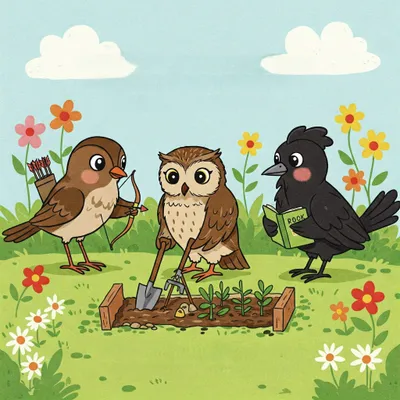
Who killed Cock Robin?I, said the Sparrow,with my bow and arrow,I killed Cock Robin.
Who saw him die?I, said the Fly,with my little teeny eye,I saw him die.
Who caught his blood?I, said the Duck,it was just my luck,I caught his blood.
Who'll make the shroud?I, said the Beetle,with my thread and needle,I'll make the shroud.
Who'll dig his grave?I, said the Owl,with my pick and trowel,I'll dig his grave.
Who'll be the parson?I, said the Rook,with my little book,I'll be the parson.
Who'll be the clerk?I, said the Lark,if it's not in the dark,I'll be the clerk.
Who'll carry the link?I, said the Linnet,I'll fetch it in a minute,I'll carry the link.
Who'll be chief mourner?I, said the Dove,I mourn for my love,I'll be chief mourner.
Who'll carry the coffin?I, said the Kite,if it's not through the night,I'll carry the coffin.
Who'll bear the pall?I, said the Crow,with the cock and the bow,I’ll bear the pall.
Who'll sing a psalm?I, said the Thrush,as she sat on a bush,I'll sing a psalm.
Who'll toll the bell?I, said the Bull,because I can pull,I'll toll the bell.
All the birds of the airfell a-sighing and a-sobbing,when they heard the bell tollfor poor Cock Robin.
History and Meaning
A robin is shot dead by a sparrow, and the rest of the birds organise his funeral: the owl digs the grave, the beetle sews the shroud, the rook plays parson. "Who Killed Cock Robin?" is a whole mock-funeral in verse, and its image of an arrow-struck robin appears in stained glass from the 1400s.
Origins
The earliest recorded print version of the rhyme was published around 1744 in "Tommy Thumb's Pretty Song Book," containing only the first four verses. The full, extended version describing the complete funeral procession did not appear in print until around 1770. However, the story itself is likely much older. A stained glass window dating to the fifteenth century in the Buckland Rectory in Gloucestershire depicts a robin being pierced by an arrow, suggesting the legend was already well-known during the late medieval period.
Meaning & Interpretation
Folklorists and historians have proposed several theories about the rhyme's true meaning. One popular interpretation links it to the downfall of Sir Robert Walpole's government in 1742. Walpole, who was Britain's first Prime Minister, was commonly referred to as "Robin," and his political demise occurred just before the song was printed.
Other researchers look further back, suggesting connections to ancient mythology. The story closely mirrors the Norse myth of the death of Balder, the god of light, who was killed by a mistletoe arrow. Some suggest it relates to the death of King William II (William Rufus), who was shot by an arrow in the New Forest in 1100. In British folklore, the robin has long held a sacred status; harming one was traditionally thought to bring severe misfortune.
When was Who Killed Cock Robin? first published?
The first four verses of the rhyme were published in 1744 in the nursery collection "Tommy Thumb's Pretty Song Book". The complete extended version was printed later, around 1770.
What does Cock Robin represent in the rhyme?
While Cock Robin is simply a bird in the literal story, historical theories suggest he represents either the fallen British politician Robert Walpole, the Norse god Balder, or the historical King William Rufus, who died from an arrow wound.
Music Video
If the player is unavailable, watch this video on YouTube.
Related Nursery Rhymes



Lyrics from nurseryrhymes.info