

Who Has Seen the Wind?


Lyrics
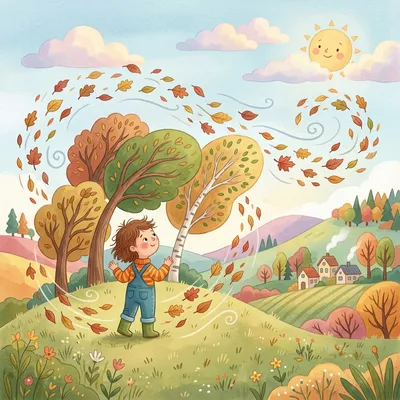
Who has seen the wind?Neither I nor you:But when the leaves hang trembling,The wind is passing through.
Who has seen the wind?Neither you nor I:But when the trees bow down their heads,The wind is passing by.
History and Meaning
Eight lines, and a named author. The second part is the unusual one. Most nursery rhymes reached us anonymously, worn smooth by repetition, with nobody to credit. This one was written by Christina Rossetti, among the finest English poets of the Victorian era, and printed in her 1872 collection Sing-Song: A Nursery Rhyme Book.
The poem opens with a question it refuses to answer directly. Has anyone seen the wind? No. Neither I nor you. What follows instead is a way of knowing without seeing: the leaves hang trembling, the trees bow down their heads, and from that movement you can tell something invisible is going past.
Origins
Rossetti wrote the verses of Sing-Song in a concentrated burst during the autumn of 1869. The book was published in 1872 by George Routledge and Sons in London, carrying 120 illustrations by Arthur Hughes, engraved by the brothers Dalziel. It was a book of original nursery rhymes, which is worth pausing on. The great nursery rhyme books of the previous decades, and the Opie scholarship that followed in the next century, were collections: editors gathered verses already circulating in kitchens and playgrounds. Rossetti sat down and wrote new ones, in the plain metre and short line of the traditional rhyme, from scratch.
She came from a household thick with art. Her brother Dante Gabriel Rossetti was a painter and poet and a founding member of the Pre-Raphaelite Brotherhood; another brother, William Michael, was a critic and also among its founders. Christina contributed poems to the Brotherhood's journal and sat as a model for several paintings.
Other pieces from Sing-Song are still read to children today, including the six-line Shrove Tuesday verse Mix a Pancake. Rossetti's best-known poem for adults, In the Bleak Midwinter, also first appeared in print in 1872, though it was written for an American magazine rather than for the nursery book.
Meaning & Interpretation
The poem teaches inference. You cannot observe the wind itself, so you observe what it does, and you reason backwards to the cause. That is a genuinely scientific habit of mind, and Rossetti delivers it in eight lines without a word of explanation or a hint of a lecture.
The two stanzas are built to escalate. In the first, the evidence is slight: leaves hang trembling, the signature of a light breeze. In the second the wind has strengthened enough to push whole trees over, and they bow down their heads. Rossetti also flips the second line between stanzas, from "Neither I nor you" to "Neither you nor I", a small piece of craft that keeps the rhyme fresh and lets the second stanza land on a different sound.
Reading the sky and the weather for signs is old practice, and it turns up across English folk verse in a more predictive mode, as in Red Sky at Night. Rossetti is not forecasting anything. She is only pointing at the evidence in front of a child and letting them draw the conclusion themselves, which is why the poem gets used so often as a first introduction to how the natural world can be read.
Its short lines and hushed pace also make it a common bedtime choice. There is nothing frightening in it, and it ends on movement passing by rather than arriving.
Who wrote Who Has Seen the Wind?
Christina Rossetti (1830 to 1894), the English poet, wrote it for Sing-Song: A Nursery Rhyme Book, published in 1872. This makes it different from most nursery rhymes, which are anonymous and folk-transmitted. Rossetti is also the author of Goblin Market and In the Bleak Midwinter.
Is Who Has Seen the Wind a real nursery rhyme?
It depends on the definition. It was not passed down through oral tradition like Humpty Dumpty or Jack and Jill, so it is not traditional in that sense. It was deliberately written as a nursery rhyme by a major poet, in the form and metre of one, and it has been recited to children continuously since 1872. Most anthologies file it with the nursery rhymes rather than with adult poetry.
Has Who Has Seen the Wind been set to music?
Yes, many times. The American composer Sidney Homer included a setting in his Seventeen Lyrics from "Sing-Song", op. 19, and the poem has attracted numerous choral and solo arrangements since. Its regular short lines and repeated opening question suit it well to singing, and school and children's choirs perform it often.
Related Nursery Rhymes




Lyrics from nurseryrhymes.info