
You're a Grand Old Flag


Lyrics
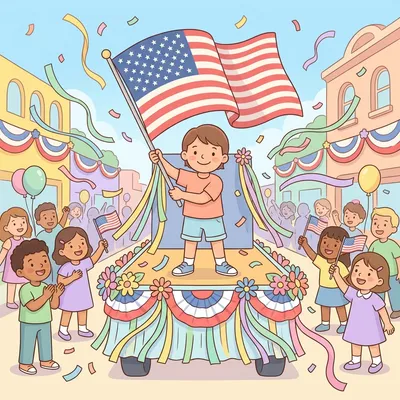
You're a grand old flag,You're a high flying flag,And forever in peace may you wave.You're the emblem ofThe land I love,The home of the free and the brave.
Ev'ry heart beats true'Neath the red, white and blue,Where there's never a boast or brag;But should auld acquaintance be forgot,Keep your eye on the grand old flag.
History and Meaning
The song had a different title for about a week. George M. Cohan wrote it as "You're a Grand Old Rag" for his 1906 musical George Washington, Jr., and enough people objected to hearing the flag called a rag that he rewrote the line.
Origins
Cohan said the phrase came from a Civil War veteran he met, who had carried the colours in battle and referred to the flag affectionately as "a grand old rag". Cohan liked the bluntness of it and used it as his title. Audiences and patriotic groups did not share his taste, complaints followed quickly, and he swapped "rag" for "flag" throughout.
The change worked. It became the first song from a stage musical to sell more than a million copies of sheet music. Cohan was already a considerable force on Broadway, writing, composing, directing, and performing, and he went on to write "Over There" during the First World War.
Meaning & Interpretation
It is a march, and the words behave like one: short lines, strong stresses, easy to sing while moving. Cohan builds it out of stock patriotic phrases on purpose, since the point is instant recognition rather than originality.
The line that stands out belongs to a different song entirely. "But should auld acquaintance be forgot" is lifted straight from Auld Lang Syne, Robert Burns's New Year song about remembering old friends. Cohan borrows the most familiar line about not forgetting and points it at the flag instead of at absent friends.
Why was the song originally called You're a Grand Old Rag?
Cohan took the phrase from a Civil War veteran who had carried the flag in battle and called it a grand old rag, meaning it fondly. Newspapers and patriotic organisations objected to the word, and Cohan changed the lyric to "flag" soon after the show opened in 1906.
Who was George M. Cohan?
He was an American entertainer who wrote, composed, directed, produced, and starred in Broadway shows in the early twentieth century. Besides this song he wrote "Give My Regards to Broadway", "Yankee Doodle Dandy", and the First World War song "Over There", for which he later received the Congressional Gold Medal.
Why does a flag song quote Auld Lang Syne?
Cohan drops in "should auld acquaintance be forgot" because by 1906 that line was universally known as shorthand for not forgetting old loyalties. Placing it next to the flag turns a song about remembering friends into a song about remembering the country.
Related Nursery Rhymes




Lyrics from nurseryrhymes.info