
Li'l Liza Jane


Lyrics
I got a gal an' you got none,Li'l Liza Jane.I got a gal an' you got none,Li'l Liza Jane.
Chorus
Oh, Eliza, li'l Liza Jane,Oh, Eliza, li'l Liza Jane.(clap on every "Liza Jane")
I got a house in Baltimore,Li'l Liza Jane.Street car runs right by my door,Li'l Liza Jane.
Come, my love, and live with me,Li'l Liza Jane.I will take good care of thee,Li'l Liza Jane.
History and Meaning
The 1916 sheet music for "Li'l Liza Jane" credits one composer, Countess Ada de Lachau of San Francisco, and labels the piece a "Southern Dialect Song". Neither half of that credit tells the whole story. The refrain was already decades old when de Lachau's name went on it, and it had been moving through African-American singing, Civil War camps, minstrel-stage publications and rural play-parties long before Sherman, Clay and Co. printed it. What the 1916 edition did was fix one version in type, and that version is the one children sing now.
The song is built for a crowd rather than a soloist. One voice sings a line, everybody answers "Li'l Liza Jane", and nobody needs to know the verses in advance. That structure is why the song survived in so many settings at once: schoolyards, string bands, jazz clubs and New Orleans street parades all have room for a tune where half the words are the same four syllables repeated.
Origins
No single author invented it. Research collected in Dan Gutstein's book "Poor Gal: The Cultural History of Little Liza Jane" (University Press of Mississippi, 2023) traces the refrain to enslaved communities in the American South before the Civil War, including a recollection from Lucy Thurston of hearing "Oh, li'l Liza, li'l Liza Jane" sung near Covington, Louisiana. During the war, "Liza Jane" songs circulated among regiments on both sides, among them the 43rd United States Colored Troops.
Printed versions came later and came in pieces. The bandleader Eddie Fox published "Good Bye, Liza Jane" as a comic song in 1871. Harry Von Tilzer issued a Tin Pan Alley "Goodbye, Eliza Jane" in 1903. Field and commercial recordings of assorted "Liza Jane" tunes appear from the late 1890s onward. The 1916 de Lachau publication is the first printing of the particular verse and chorus above.
It helps to think of "Liza Jane" as a family rather than a song. "Goodbye Liza Jane", "Little Liza Jane" and the old-time fiddle tune plain "Liza Jane" share a name and a heroine, but they are separate pieces with separate melodies. Writers who claim the tune came from Stephen Foster's "Camptown Races" are pointing at a real resemblance, but the connection is unproven.
Meaning & Interpretation
The words are courtship bragging. "I got a gal an' you got none" is a taunt aimed at whoever is not singing, and the following verses lay out what the singer can offer: a house in Baltimore, a streetcar at the door, an invitation to come and live with him. The verses float freely, which is normal for folk song. Singers swap them, drop them and invent new ones, since the chorus carries the whole thing anyway.
Eliza, shortened to Liza, was an ordinary given name of the period, and Liza Jane became a stock sweetheart in nineteenth-century American song. The name does not point to a particular woman, and no documented Liza Jane lies behind it.
Is Li'l Liza Jane a minstrel song?
Partly, and only at one stage of its life. Several nineteenth-century "Liza Jane" songs were published and performed on the blackface minstrel circuit, which took heavily from African-American music while caricaturing the people who made it, and Eddie Fox's 1871 sheet music belongs to that world. The refrain itself is older than those printings and came out of Black folk singing, not off the minstrel stage. The versions sung today descend from the play-party tradition instead, and their words carry no caricature. The eye-dialect spelling and the "Southern Dialect Song" subtitle on the 1916 cover are publishing habits of that era, and modern songbooks usually drop them.
How is Li'l Liza Jane played as a game?
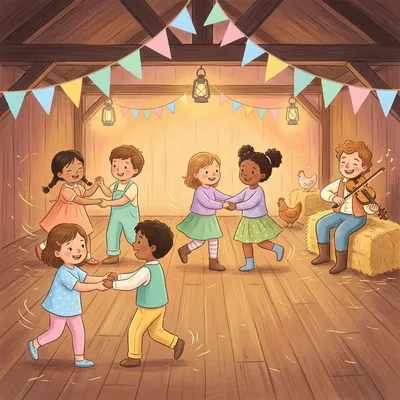
It was a play-party song, meaning it was sung and clapped rather than played on instruments. Play-parties were the workaround in communities where churches disapproved of fiddles and dancing, so young people formed a ring, sang their own accompaniment and stepped in time. Details varied by region, but the usual form was a circle with one player in the middle who picked a partner during the chorus. In classrooms today it is simpler: everyone claps on "Li'l Liza Jane" while a leader improvises the call lines.
Why do New Orleans brass bands play Li'l Liza Jane?
The tune is one of the standards of the New Orleans brass-band repertoire because its short repeating strain suits the format. Horns can trade the call and response, soloists can stretch out over the same few chords, and the crowd along a parade route can join the answer without rehearsal. It moved into traditional jazz, bluegrass, folk and rock sets from there. Nina Simone performed it at the Newport Jazz Festival in 1960, keeping a line straight from the de Lachau sheet music.
Related Nursery Rhymes




Lyrics from nurseryrhymes.info