
Old Mother Hubbard


Lyrics
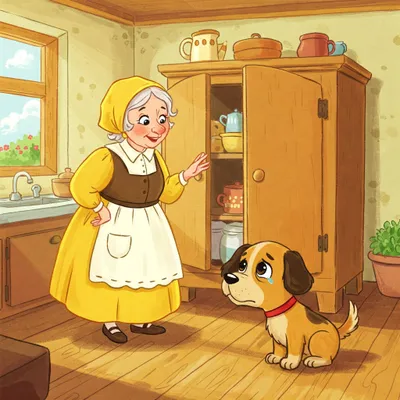
Old Mother HubbardWent to the Cupboard,To give the poor Dog a bone;When she came there,The Cupboard was bare,And so the poor Dog had none.
She went to the Baker’sTo buy him some Bread;When she came backThe Dog was dead!
She went to the Undertaker’sTo buy him a coffin;When she came backThe Dog was laughing.
History and Meaning
Old Mother Hubbard goes to the cupboard for a bone and finds it bare. From there the rhyme spins into pure slapstick, as her improbably clever dog plays dead, reads the news, and smokes a pipe between her errands. Sarah Catherine Martin wrote it in 1805, and it sold in huge numbers.
Origins
The rhyme was written by Sarah Catherine Martin and first published in 1805 under the title The Comic Adventures of Old Mother Hubbard and Her Dog. The book was a major commercial success. Martin allegedly composed the poem to entertain children while staying at the home of John Pollexfen Bastard in Devon, England. The housekeeper of the estate, whose surname was Hubbard, may have served as the physical inspiration for the character.
Meaning & Interpretation
On the surface, the rhyme is a whimsical comedy. The dog continuously tricks his owner by playing dead, reading newspapers, and performing music, while she runs back and forth to buy him goods.
However, a popular historical theory suggests the rhyme is actually a political allegory. According to this interpretation, Old Mother Hubbard represents Cardinal Thomas Wolsey, while the dog represents King Henry VIII. The "bone" symbolizes the divorce Wolsey tried to secure for Henry from Catherine of Aragon, and the "bare cupboard" represents the Pope's refusal to grant the annulment. Most modern historians view this political theory as a late-nineteenth-century invention with no contemporary backing.
Who wrote Old Mother Hubbard?
Old Mother Hubbard was written and illustrated by Sarah Catherine Martin. She first published the book in London in 1805.
What is the meaning of Old Mother Hubbard?
While written as a funny comic story for children, some theorists suggest it represents Cardinal Wolsey's failed attempts to secure a divorce for King Henry VIII.
Music Video
If the player is unavailable, watch this video on YouTube.
Related Nursery Rhymes


Lyrics from nurseryrhymes.info