

Wee Willie Winkie


Lyrics
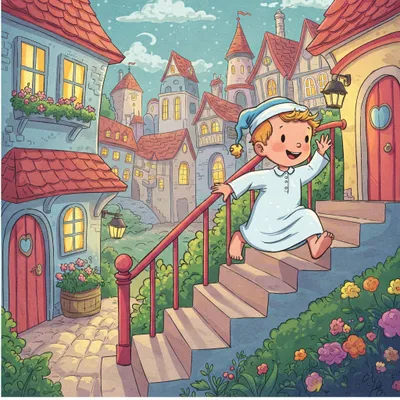
Wee Willie Winkie runs through the town,Up stairs and down stairs in his night-gown,Tapping at the window, crying at the lock,Are the children in their bed, for it's past ten o'clock?
Hey, Willie Winkie, are you coming in?The cat is singing purring sounds to the sleeping hen,The dog's spread out on the floor, and doesn't give a cheep,But here's a wakeful little boy who will not fall asleep!
Anything but sleep, you rogue! glowering like the moon,Rattling in an iron jug with an iron spoon,Rumbling, tumbling round about, crowing like a cock,Shrieking like I don't know what, waking sleeping folk.
Hey, Willie Winkie, the child's in a creel!Wriggling from everyone's knee like an eel,Tugging at the cat's ear, and confusing all her thrumsHey, Willie Winkie, see, there he comes!
Weary is the mother who has a dusty child,A small short sturdy child, who can't run on his own,Who always has a battle with sleep before he'll close an eyeBut a kiss from his rosy lips gives strength anew to me.
History and Meaning
Wee Willie Winkie runs through the town in his nightgown, tapping at windows past ten o'clock to check that the children are in bed, a sandman dressed as a town crier. The Glasgow poet William Miller wrote him in Scots in 1841, and died in poverty despite the rhyme's fame.
Origins
The verses were written by the Scottish poet William Miller (1810 to 1872), who lived and worked in Glasgow. The poem was first published in the Scots language in 1841 in the anthology "Whistle-Binkie: A Collection of Songs for the Social Circle". An English translation was later published in 1844, introducing the rhyme to a much wider audience. Miller supported himself as a skilled woodturner and cabinet maker throughout his life, and despite his success as a writer, he died in poverty in 1872. A memorial monument stands in his honour in the Glasgow Necropolis.
Meaning & Interpretation
The rhyme operates as a gentle bedtime warning, urging children to settle down before the town crier, Wee Willie Winkie, catches them awake past ten o'clock. In traditional Scottish lore, Willie Winkie represents the sandman or the spirit of sleep.
The lyrics also contain several traditional Scottish terms. For example, when the poem mentions the child being in a "creel," it refers to a wicker basket, using a Scots idiom that describes a child behaving in an unruly or excited manner. Similarly, the "thrums" that the child confuses are the loose ends of threads on a weaving loom, reflecting Glasgow's historical role as a textile manufacturing hub.
Who wrote Wee Willie Winkie?
The nursery rhyme was written by the Scottish poet William Miller. It was first published in 1841 in a compilation of regional songs and stories.
What is the meaning of the word creel in the rhyme?
In Scots dialect, a creel is a wicker basket. The phrase "in a creel" is a traditional idiom used to describe a child who is acting wild, hyperactive, or difficult to control, especially at bedtime.
Music Video
If the player is unavailable, watch this video on YouTube.
Free Printable Coloring Page
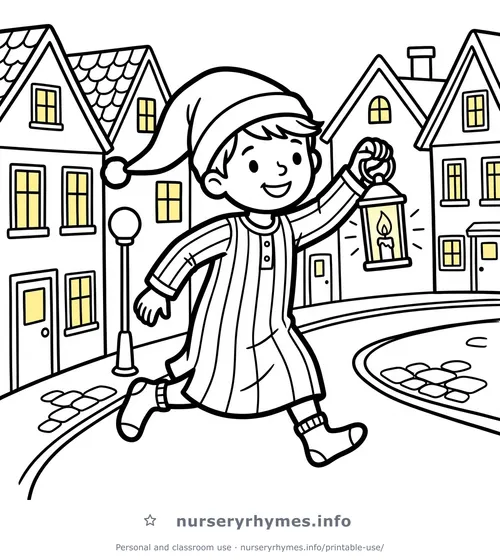
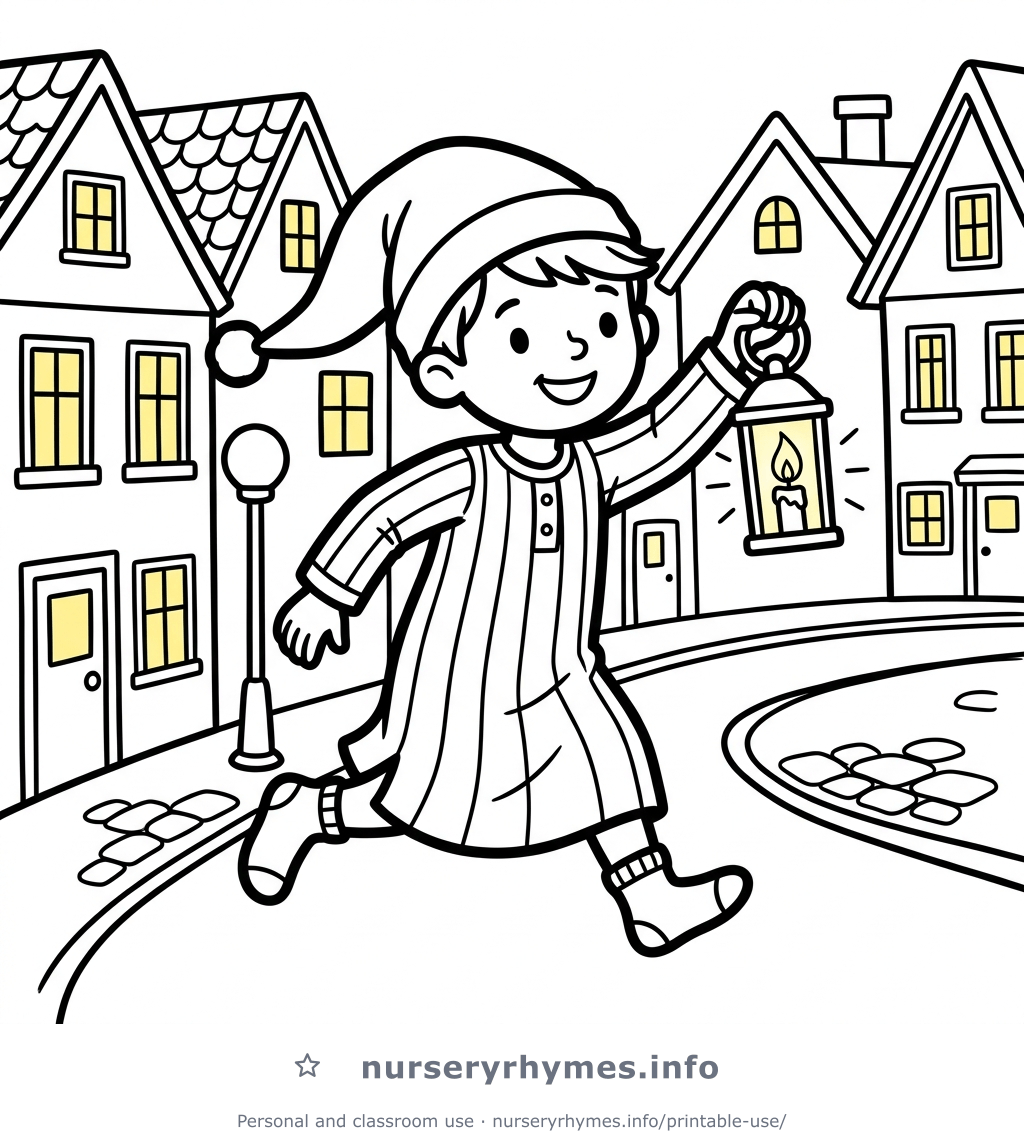
Print this Wee Willie Winkie coloring sheet for free and let little ones bring it to life with crayons or pencils.
Full-resolution PNG · Fits the paper size selected in your print dialog · Personal and classroom use
Related Nursery Rhymes





Lyrics from nurseryrhymes.info