
Jabberwocky


Lyrics
'Twas brillig, and the slithy tovesDid gyre and gimble in the wabe:All mimsy were the borogoves,And the mome raths outgrabe.
"Beware the Jabberwock, my son!The jaws that bite, the claws that catch!Beware the Jubjub bird, and shunThe frumious Bandersnatch!"
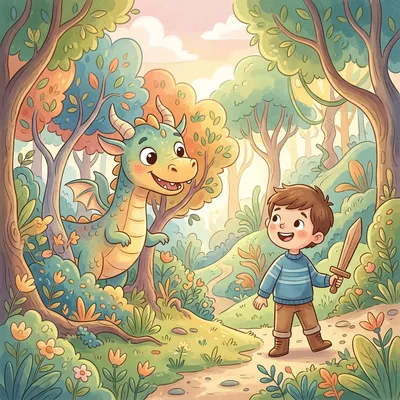
He took his vorpal sword in hand;Long time the manxome foe he sought,So rested he by the Tumtum treeAnd stood awhile in thought.
And as in uffish thought he stood,The Jabberwock, with eyes of flame,Came whiffling through the tulgey wood,And burbled as it came!
One, two! One, two! And through and throughThe vorpal blade went snicker-snack!He left it dead, and with its headHe went galumphing back.
"And hast thou slain the Jabberwock?Come to my arms, my beamish boy!O frabjous day! Callooh! Callay!"He chortled in his joy.
'Twas brillig, and the slithy tovesDid gyre and gimble in the wabe:All mimsy were the borogoves,And the mome raths outgrabe.
History and Meaning
Two words from this poem are in your dictionary. "Chortle" and "galumph" were invented by Lewis Carroll for "Jabberwocky" in 1871, and both are now ordinary English that people use without any idea where they came from. That is a remarkable outcome for a poem in which most of the words mean nothing at all. Carroll also coined the term "portmanteau word" to describe what he was doing, and linguists still use it.
The poem appears in Through the Looking-Glass, where Alice finds it printed in a book she cannot read until she holds it up to a mirror. Her reaction after finishing it is the best short review the poem has ever had: "Somehow it seems to fill my head with ideas, only I don't exactly know what they are!"
Origins
The first stanza came sixteen years before the rest. In 1855 Carroll, then in his early twenties, printed "Twas bryllyg, and þe slythy toves" in Mischmasch, a handwritten magazine he produced for his family, under the title "Stanza of Anglo-Saxon Poetry". He set it in mock-medieval lettering with thorn characters and attached a straight-faced glossary, the whole thing a joke at the expense of the scholarly editions of Old English then being published.
He expanded the stanza into a seven-stanza narrative for Through the Looking-Glass in 1871. John Tenniel's drawing of the Jabberwock, a long-necked beast with buck teeth and a waistcoat, was first planned as the book's frontispiece. Carroll had second thoughts, polled about thirty mothers on whether it would frighten children, and moved it inside the book, putting the White Knight on the frontispiece instead.
Meaning & Interpretation
The trick is that the grammar is perfect. Every ending, article, and helper word is real English: "did gyre and gimble", "came whiffling through", "he left it dead". Only the nouns, verbs, and adjectives are invented. So the sentence machinery tells you a monster was hunted, that something was killed with a blade, and that someone came home to a delighted parent, even though you cannot say what a borogove is. Children feel this working before they can explain it, which is why the poem reads aloud so well to listeners who have understood not one creature in it.
Inside the book, Humpty Dumpty explains several of the words to Alice, which makes this a rare case of an author glossing his own nonsense. He tells her "slithy" packs together lithe and slimy, and "mimsy" packs together flimsy and miserable. "You see it's like a portmanteau," he says, meaning a suitcase that opens into two compartments. Carroll used the same method in The Hunting of the Snark and elsewhere. His two other well-known nonsense pieces work differently: The Walrus and the Carpenter, from this same 1871 book, is written in plain words and gets its strangeness from the story, and How Doth the Little Crocodile from 1865 is a straight parody of a moral poem children already knew.
Not every word has a settled meaning. Humpty Dumpty explains some, Carroll's 1855 glossary explains some differently, and words like "frumious", "manxome", and "tulgey" were never pinned down by their author. Where the meaning is open, it is open on purpose.
Which Jabberwocky words are in the dictionary?
"Chortle" and "galumph" both are. Chortle blends chuckle and snort, and appears in the poem's sixth stanza. Galumph, which the Oxford English Dictionary traces to a blend of gallop and triumphant, means to move along with heavy bounding steps. Neither word existed before Carroll wrote this poem. "Portmanteau word" is his too, and is now the standard linguistic term for a coinage packed from two others.
What is a portmanteau word?
It is a word made by squeezing two words together so that both meanings ride along inside it. Carroll's examples in the poem are slithy, from lithe and slimy, and mimsy, from flimsy and miserable. The name comes from a portmanteau, a travelling case that opens into two halves. Modern portmanteaus like brunch, smog, and motel are built the same way.
Is Jabberwocky too scary for young children?
Most children handle it easily. The monster is killed in one line and the poem is a mock-heroic dragon-slaying in the fairy-tale mode, with no blood or detail. Carroll himself worried about it, which is why Tenniel's picture of the Jabberwock was moved out of the frontispiece position, but the fear in the poem is the pleasant fairy-tale kind. Younger listeners tend to fix on the sounds instead, especially "snicker-snack" and "Callooh! Callay!".
Related Nursery Rhymes
Lyrics from nurseryrhymes.info